
What Happens During A Comprehensive LASIK Evaluation?

Thinking about LASIK and wondering what actually happens during the evaluation? You aren’t alone. If you are considering LASIK for vision correction, your first step is a comprehensive pre-LASIK evaluation designed to take a closer look at your eyes, your eye health, and your vision. But what exactly does a LASIK evaluation involve? Keep reading to learn what you can expect during a LASIK evaluation and why each part of the process matters.
Understanding Your LASIK Candidacy First
Wondering, “Am I actually a good candidate for LASIK?” We thought you might be. The answer depends on more than your glasses or contact lens prescription. During your LASIK evaluation, your eye surgeon will take a closer look at your eyes, vision, and overall eye health to see whether LASIK may be the right vision correction option for you. Your doctor will consider your corneal health, eye measurements, tear film, and medical history, while looking for anything that could affect your results or increase the risk of LASIK complications.
Review Your Medical and Vision History
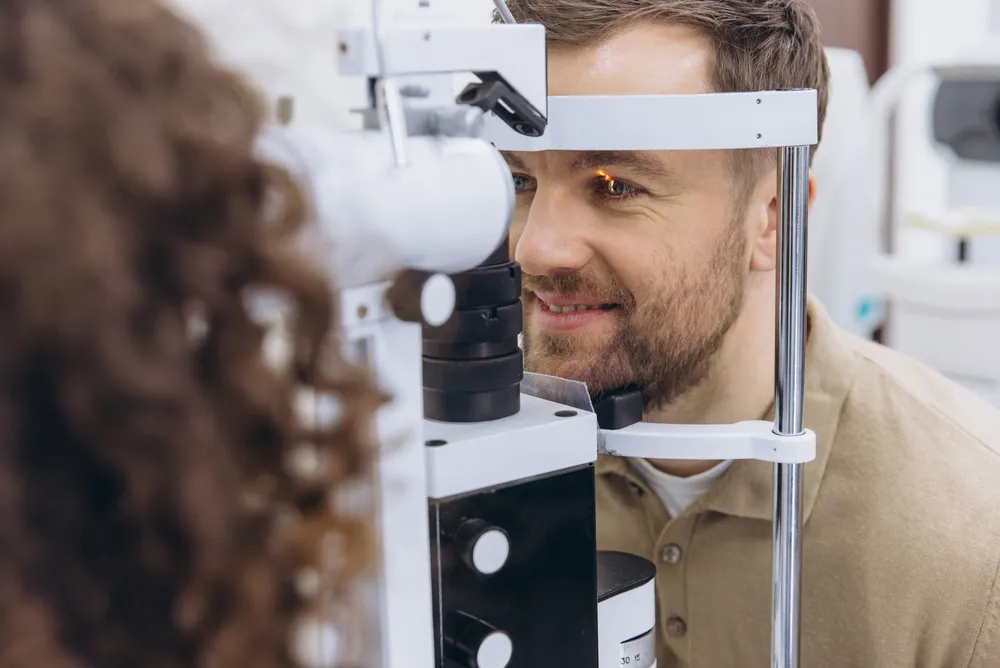
Before the actual eye exam begins, your LASIK consultation starts with a conversation about you and your vision. During this convo, your eye doctor will review your vision history, current glasses or contact lens prescription, medications, and any medical or eye conditions that could affect your LASIK procedure. This may include conditions such as diabetes, autoimmune diseases, dry eye symptoms, or previous eye surgery.
Your eye doctor might also ask about your lifestyle, vision goals, and expectations. Do you play sports? Spend long hours looking at screens? Drive frequently at night? These details help your eye doctor understand what you want from vision correction. Your prescription should also be stable for at least a year before LASIK is considered, since a changing prescription could affect your results. If you wear contacts, your doctor may also recommend taking a break from them before your eye measurements to allow your cornea to return to its natural shape.
Eye Exam: Check Your Overall Eye Health
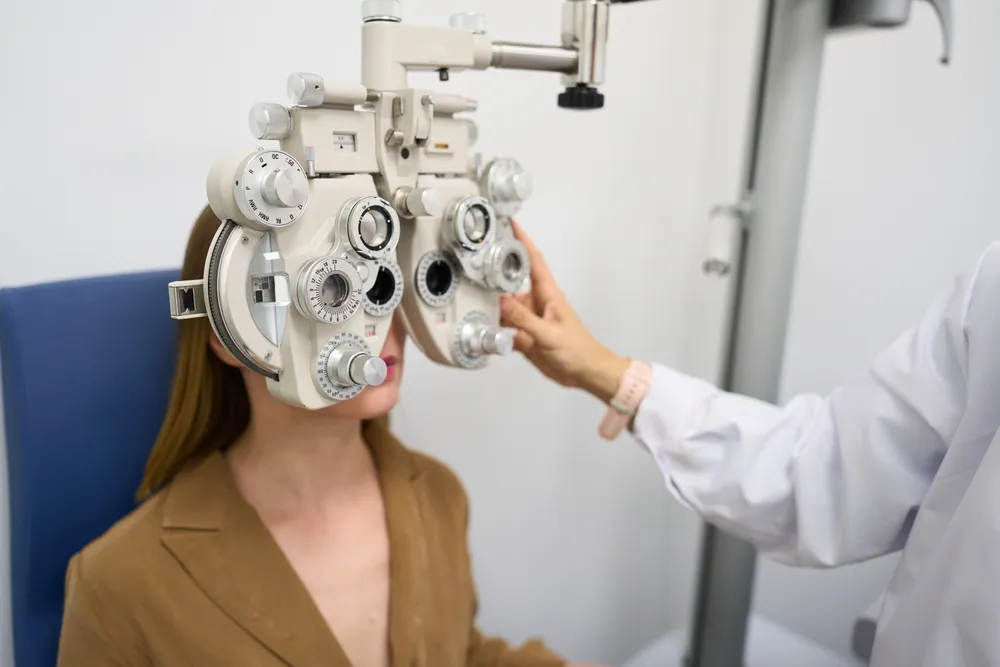
Next up: your eye exam. And no, we aren’t just talking about seeing how far down you can read the letters on an eye chart, although your doctor will check your visual acuity to see how clearly you can see at different distances and perform a refraction to determine your precise vision prescription. During your pre-LASIK evaluation, your eye doctor will also take a closer look at your overall eye health, including your eyelids, tear glands, cornea, and the front portion of your eye. Why does all of this matter? Your eyes need to be healthy before moving forward with a LASIK procedure, so your eye doctor will look for anything that could affect your treatment or recovery.
Similar to what happens during a routine eye exam, your doctor may also perform a dilated eye exam. The special eye drops used temporarily widen your pupils, giving your eye doctor a better view of the back of your eye. This includes the retina and other structures that are harder to see during a standard eye exam. Together, these steps help make sure your eyes are ready for LASIK.
Why Eye Measurements Matter
So, why does your doctor need to take so many eye measurements during a LASIK evaluation? Because LASIK is not a one-size-fits-all procedure. Your doctor will measure the shape, thickness, and curvature of your cornea to better understand how your eyes may respond to laser vision correction. Tests such as corneal topography and pachymetry can create detailed information about your cornea and help your doctor look for irregularities that could affect your treatment. These eye measurements also help determine whether there is enough corneal tissue for the planned LASIK procedure.
Tear Film and Dry Eye Assessment
Let’s talk about something you may not expect to be part of a LASIK evaluation: your tears. More specifically, your tear film. This thin layer of moisture covers the surface of your eyes and plays an important role in keeping your eyes comfortable and your vision clear. During your LASIK evaluation, your eye doctor may assess your tear film and look for signs of dry eyes or other issues affecting the surface of your eyes. This matters because LASIK can temporarily affect tear production and sensation. If dry eyes are identified, your eye doctor may recommend addressing them before the procedure to help support a more comfortable recovery and healthier eyes.
Reviewing Your Results and LASIK Options
Now comes the part where everything starts to come together. Once your exams and eye measurements are complete, your doctor will review the results with you and talk through what they mean for your vision and eye health. If you are a good candidate for LASIK, your doctor can explain the procedure, what you can expect before and after surgery, and whether laser vision correction aligns with your goals.
If LASIK is not the best option for your eyes, that does not necessarily mean you are out of options. Your doctor may discuss other vision correction procedures based on your individual needs. This conversation also gives you the opportunity to ask questions, talk through potential LASIK complications, and feel confident about the next step for your eyes.
Ready to Find Out If LASIK Is Right for You?
So, what happens next? At Columbus Laser & Cataract Center, it starts with getting to know you, your vision, and your eyes. Our team will take the time to review your eye health, discuss your goals, and complete the exams and eye measurements needed to determine whether LASIK may be a good fit.
Because every patient’s eyes are different, your LASIK procedure should be tailored to you. If you are ready to explore your vision correction options, why not start with a conversation about what may be possible for your eyes?