
Does Laser Surgery Change How Eyes React to Light?

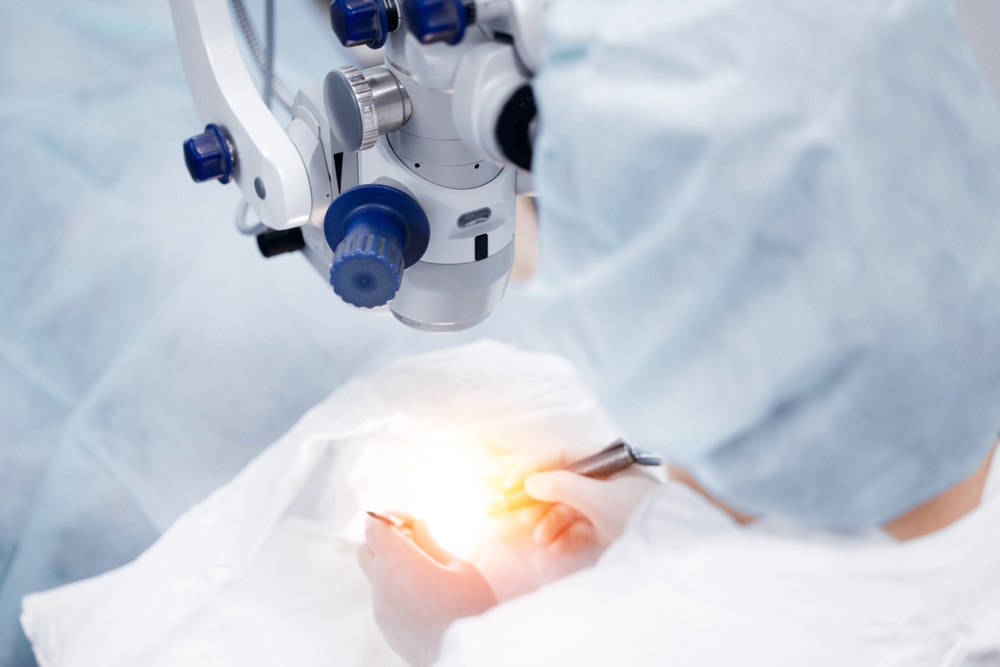
Many patients who undergo laser eye surgery are more sensitive to light in the weeks and months after their procedure. Others start seeing halos and glares. Some patients worry that these changes will be permanent. We’re here to tell you that these symptoms are normal and temporary. Your eyes are still adjusting to the changes made during your procedure.
In this blog, we’ll explain how laser eye surgery affects how your eyes respond to light. We’ll also go over the most common side effects of laser eye surgery and when it’s worth scheduling a follow-up appointment with your ophthalmologist.
Does Refractive Surgery Permanently Change How My Eyes Respond to Light?
Yes and no. In one sense, yes, refractive surgery changes how your eyes handle light. During your surgery, we reshape your corneas so light will focus on your retinas properly. This is a permanent change.
But when patients ask this question, they’re usually wondering whether the unwanted side effects—like light sensitivity, glare, and halos—will stick around forever. The answer is no. These side effects are common during the healing process, but they go away over time.
If you ever feel like your light sensitivity symptoms are getting worse during your recovery, not better, schedule a follow-up appointment with your ophthalmologist. We’ll take a look at your eyes and get to the bottom of your symptoms.

How Laser Surgery Affects How Your Eyes Respond to Light
Cornea Healing and Surface Changes
Laser eye surgeries like LASIK reshape the surface of your cornea, and since that’s the part of your eye that bends light coming in, even small changes can affect how things look—especially lights at night. As the surface of your corneas smooths out again, your visual system will settle in. The brain is very adaptable. It will relearn how to interpret the signals your eyes are sending it.
Nerve Recovery and Pupil Response
Another big contributor to light sensitivity is corneal nerve disruption. These nerves sense dryness and irritation, so while they’re healing, your eyes will be more sensitive than usual. Dry corneas scatter light unevenly, which is why bright lights may feel harsher. Many patients notice this the most in the grocery store or when they’re driving at night. This light sensitivity will gradually go away as your corneal nerves heal.
Dryness and Tear Film Changes
Dry eyes are completely normal after any laser surgery, and this plays a part in light sensitivity too. When your eyes are dry and your tear films aren’t stable, bright lights can scatter, causing hazy vision and halos. Lubricating eye drops usually help, but your eyes will take anywhere from a few weeks to a few months to stop being dry all the time. Dry eye is one of the reasons why your light sensitivity symptoms may fluctuate day to day.
Everyone Heals Differently
The healing process after laser eye surgery is slightly different for everyone because our eyes are unique. For example, people with larger pupil size and higher refractive errors usually have more light sensitivity after surgery. This isn’t necessarily a bad thing. Two people can have the same surgery from the same surgeon on the same day and have slightly different symptoms and healing timelines.
Light-Related Side Effects After Laser Eye Surgery
Bright Light Sensitivity
Bright lights will feel intense right after surgery. You might feel like your eyes have forgotten how to squint. This happens because your corneal nerves are still recovering. Bright light sensitivity goes away gradually as your eyes heal.
Glares, Halos, and Starbursts
Some patients experience light distortion symptoms like glare, halo phenomena, and starbursts after laser eye surgery. A glare looks like a scattered burst of light coming off headlights and reflective surfaces. A halo is a soft ring that you might see around lights. Starbursts look like lines of light that radiate out from a light source. These light distortions are very normal to see as your eyes are healing.
Worse Night Vision
Many patients experience worse night vision while they’re recovering from refractive laser eye surgery. It’s harder to see fine details in dimly-lit rooms, and it’s harder to drive at night because of glare and halo disturbances. These are short-term changes in light perception and contrast sensitivity that will get better as your visual system adapts.
Long-Term LASIK-Related Complications
Long-term LASIK complications aren’t as common as they used to be, but they can happen. Schedule a follow-up appointment with your ophthalmologist if you notice any of these symptoms:
- Halos, glares, or starbursts that get stronger over time instead of improving
- Irregular halos, glares, or other light distortions
- Poor night vision that stays bad or gets noticeably worse in the weeks and months after surgery
- Severe or persistent dry eye
- Double vision or ghosting in one eye
- Any sudden vision changes
What is Spherical Aberration?
Not all light sensitivity is the same. Early on, you’ll be sensitive to lights because your corneas are healing. Dryness and swelling can scatter light, making bright lights look harsher. These symptoms will fade as the surface of your corneas smooths out.
Spherical aberration is different. It’s not a healing problem; it’s an optical focusing issue. If the center and edges of your corneas bend light differently, the rays don’t meet at the same point. This mismatch can cause halo disturbances even if your corneas are perfectly smooth and recovered.
If your light sensitivity symptoms aren’t improving or they’re getting worse, it’s a good idea to schedule a follow-up appointment with your ophthalmologist. We’ll check for corneal aberrations and other issues.
Contact Columbus Laser & Cataract Center Today
Light sensitivity after laser eye surgery can make you feel like something is wrong, but in most cases, it’s just your eyes adjusting as your corneas heal. Some symptoms fade quickly, while others take a little longer. And a few symptoms—like spherical aberration—may need a closer look from an ophthalmologist. Always schedule an appointment with your ophthalmologist if you feel your symptoms are getting worse instead of better in the weeks and months after your surgery.
Are you considering laser eye surgery in Columbus Ohio? Have you already had laser eye surgery and you’re dealing with light sensitivity that isn’t improving? Our team is here to help. Schedule an appointment at Columbus Laser & Cataract Center today to find out whether you’re a good candidate for vision correction or to get relief from light sensitivity.